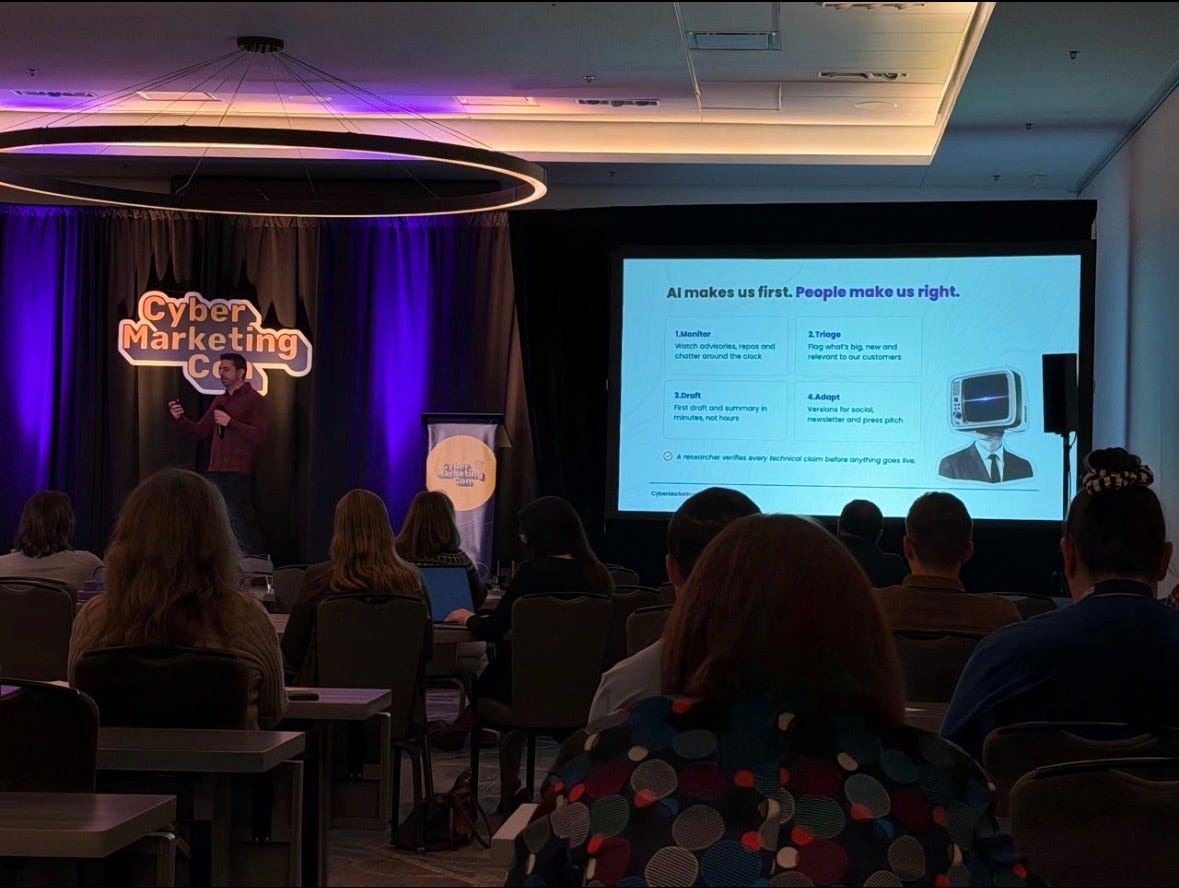
This week I flew to Austin for CyberMarketingCon and gave a talk called Own the Story: Building a Newsroom to Fuel Your Brand and Growth Engines. The room was full of people who do what I do: try to get a security brand heard over a lot of noise.
1. Why a newsroom?
Let me say this first: a newsroom isn’t the answer for every brand. Your version could look completely different. A podcast, a data report, a community, a recurring live show. The format matters less than the angle behind it.
For us, the angle came from what I think of as the three brand rules. A great brand angle sits where three things meet:
Exciting / unique. People want to read it without being paid to, and you’re not the tenth vendor saying the same thing.
What’s in it for your audience. It solves a real need for the people you want to reach.
Relevant to your product. It leads back to what you actually sell.
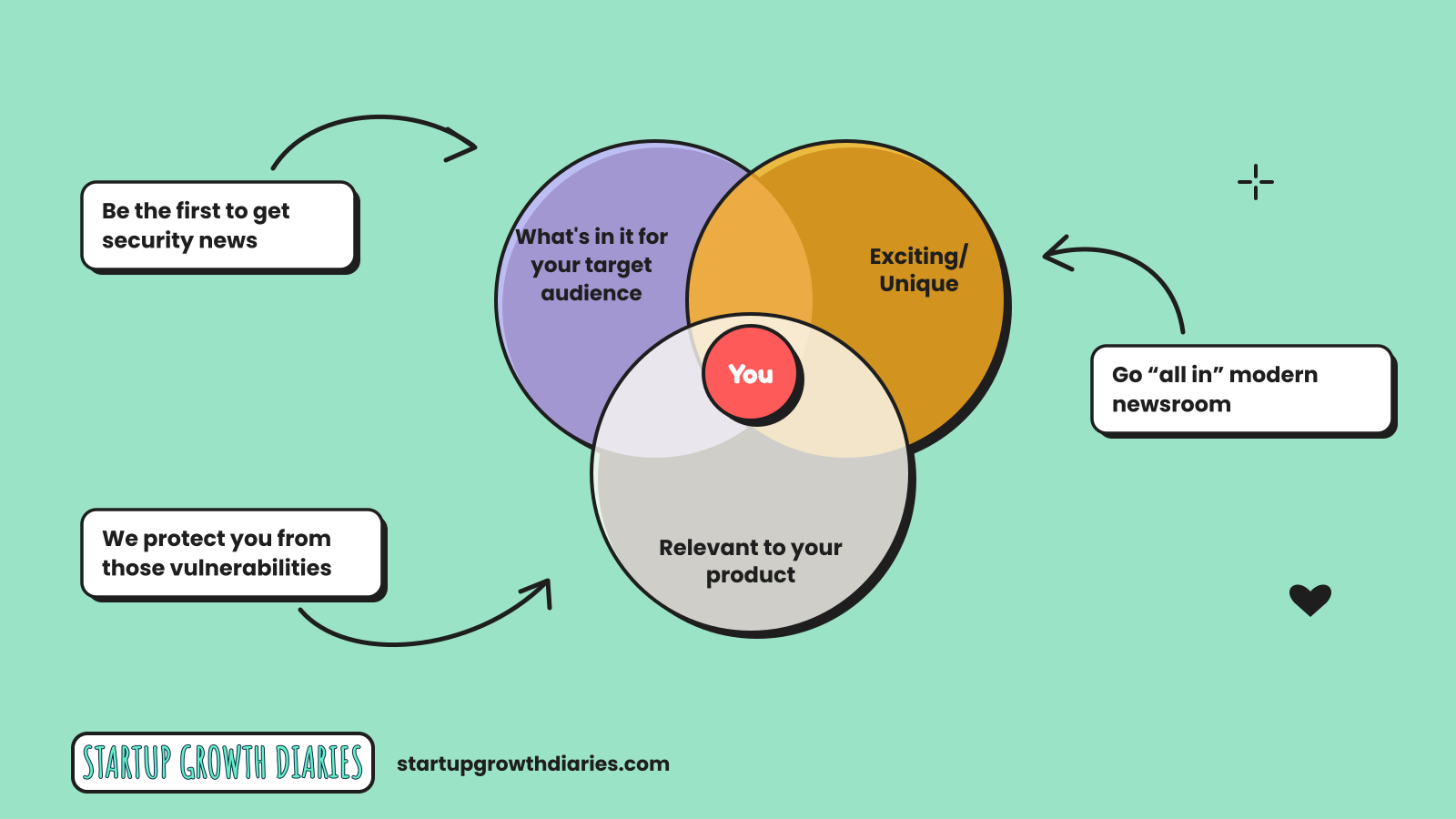
Miss any one of them and the content still gets made. It just stops working for the brand:
Interesting and new, but not relevant: lots of traffic, zero pipeline. People love it and never connect it to you.
Relevant and new, but not interesting: a product blog post in disguise. Nobody reads it.
Interesting and relevant, but not new: you’re the tenth vendor writing about the same CVE with the same take. Just more noise.
When we ran OX through those three rules, a newsroom made a lot of sense:
Exciting / unique: go all in on a modern newsroom, something no AppSec vendor was really doing.
For our audience: be the first to get security news.
Relevant: OX protects you from exactly those vulnerabilities.
Our angle fit in one sentence: there’s a new vulnerability (almost) every week, and someone gets to own that story. We decided it would be us.
Before going all in, we validated it. We put the idea in front of the market (”Get security news before anyone else”) and watched the response before committing real resources.
What a newsroom gives the brand:
Own the narrative. When people think “new vulnerability,” they think of us, and we frame the story before anyone else.
Growth. Breaking stories bring in people who would never search for “AppSec platform.”
PR that echoes. Journalists need a fast, credible source, so our stories get repeated in other people’s coverage.
2. How we did it
Start scrappy, then improve. We didn’t wait for a perfect setup. We shipped, learned, and tightened the machine as we went.
Pair the experts with the storytellers. Our unfair advantage is the OX Research team, the people who find, verify and explain vulnerabilities. The key move was not asking them for “content.” Instead we built a newsroom pod: researchers working directly with a writer/editor, a designer, and a PR + social lead. The expert and the storyteller work in the same room.
AI makes us first. People make us right. AI handles the speed work:
Monitor: watch advisories, repos and chatter around the clock.
Triage: flag what’s big, new and relevant to our customers.
Draft: a first draft and summary in minutes, not hours.
Adapt: versions for social, newsletter and press pitch.
But a researcher verifies every technical claim before anything goes live. In security, being first and wrong is worse than being second.
Everyone knows their job when a story breaks. The playbook is agreed in advance, so nobody schedules a meeting when a big vulnerability drops:
0h, Detect: the alert hits the newsroom channel (AI + on-call).
15m, Verify: is it real? Who is affected? Is it ours to tell? (Research)
30m, Publish: the story goes live in the newsroom with clear guidance (Writer + design).
1h, Push: press pitch, social and a sales alert (PR + social).
2h+, Follow up: deeper analysis, newsletter, webinar (whole team).
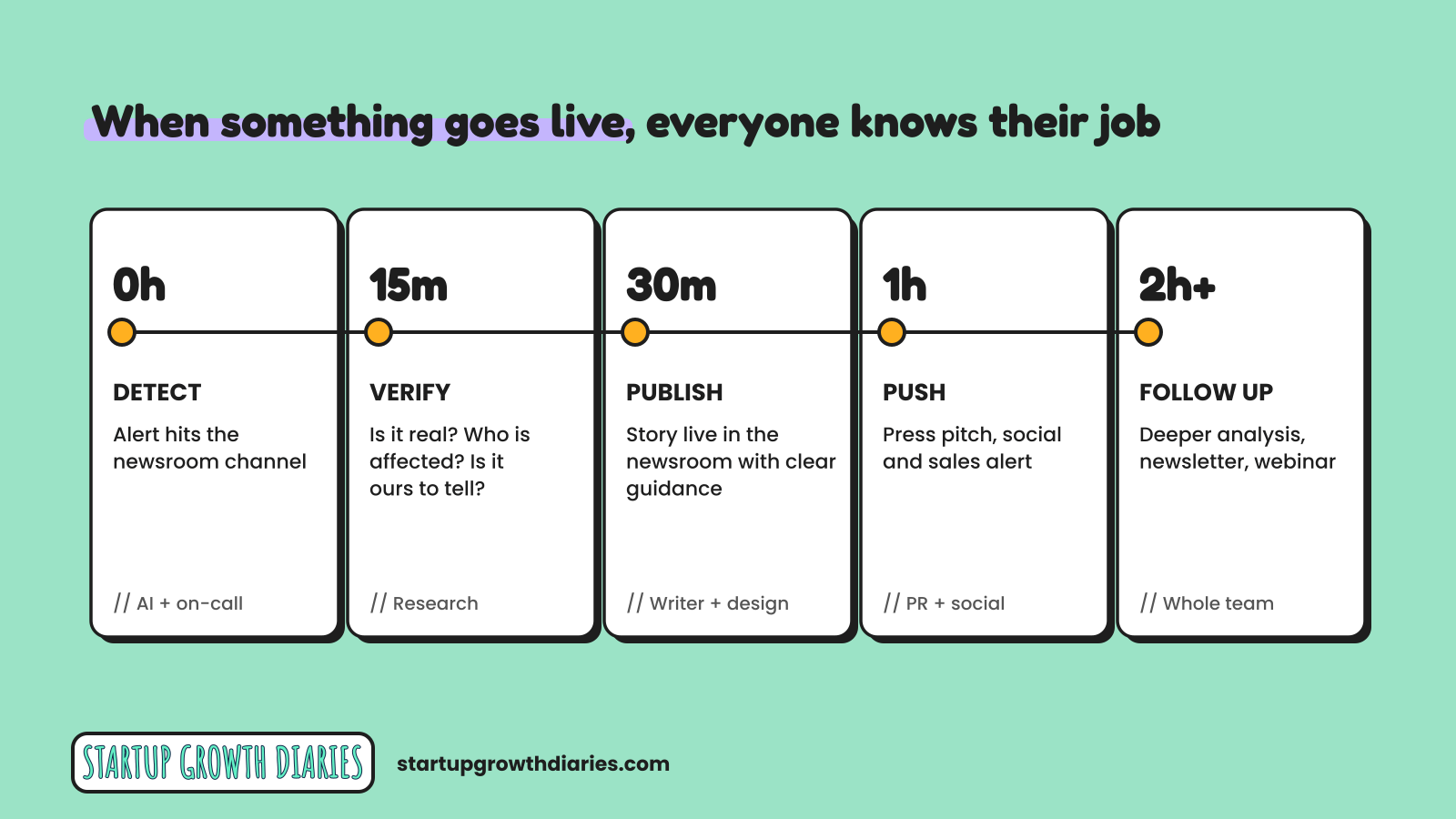
That “is it ours to tell?” check matters. Not every vulnerability is a story for us.
3. How did we reach new audience?
One story goes out through six channels on the same day:
PR: we pitch our research as the expert take, not a product story.
Social: researchers post from their own accounts, and the brand amplifies.
Website: the newsroom is the home base every channel links back to.
Influencers: briefings for the analysts and voices who shape opinion.
Newsletters: our own list, plus the industry newsletters people already read.
Customers and prospects: sales gets a timely, useful reason to reach out: “Here’s what this means for you.”
We also built dedicated distribution: a research section on the site, a newsletter, and a monthly roundup.
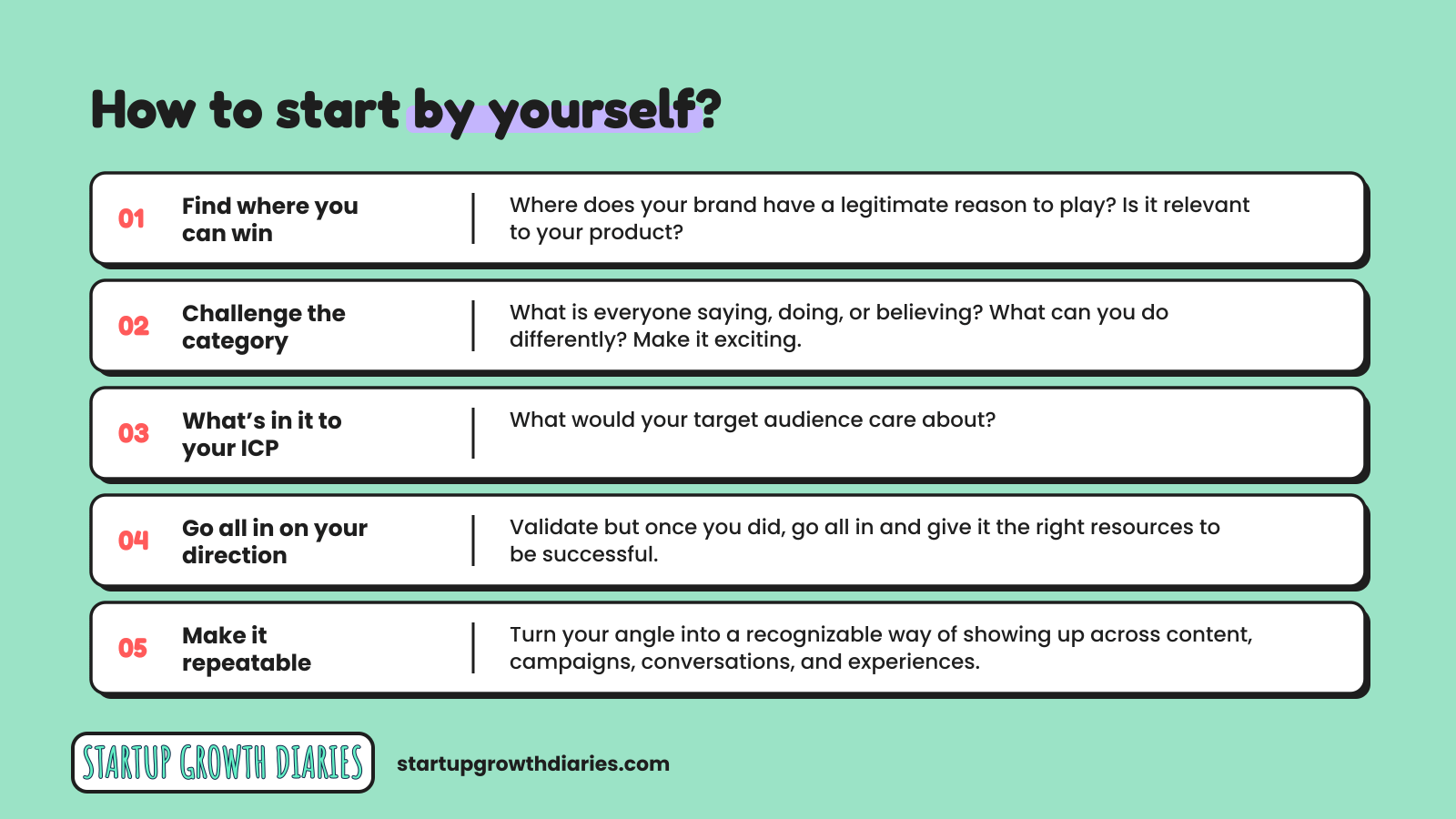
4. Steal this: 5 steps to find your brand angle
Most teams don’t have a research team, and that’s fine. Everyone has at least one expert. None of these steps needs new budget.
Find where you can win. Where does your brand have a legitimate reason to play? Is it relevant to your product?
Challenge the category. What is everyone saying, doing or believing? What can you do differently? Make it exciting.
Ask what’s in it for your ICP. What would your target audience actually care about?
Go all in on your direction. Validate first. Once you have, commit and give it the resources it needs to succeed.
Make it repeatable. Turn your angle into a recognizable way of showing up across content, campaigns, conversations and experiences.
Find the story only you can tell. Then be the first to tell it.
If you were in the room and want to keep the conversation going, or you missed it and want the slides, reply to this email or find me on LinkedIn.